
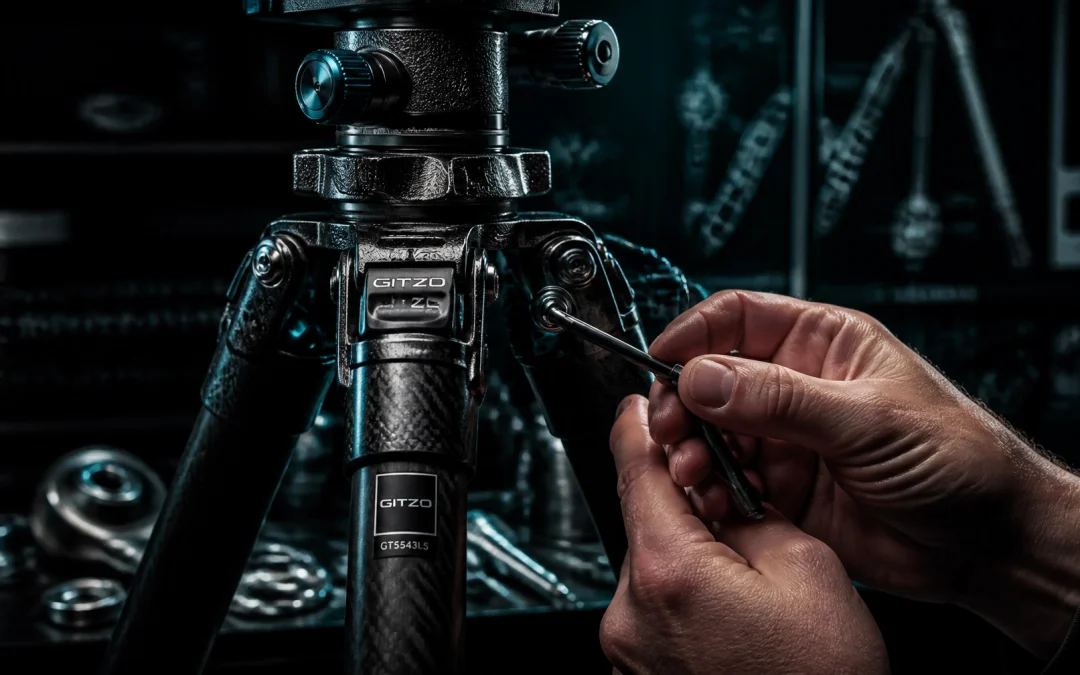
For over a century, Gitzo has set the standard for professional camera support. Their tripods are often viewed as "lifetime" tools: investments designed to endure the rigors of studio work and the unpredictability of the field. However, even the most robust engineering is subject to the laws of friction and wear. Over time, bushings lose their grip, leg locks become gritty, and rubber feet eventually surrender to the elements.
Maintaining these legendary supports requires a specialized understanding of gitzo tripod parts. Because Gitzo designs their equipment with a modular philosophy, most components are replaceable. This guide provides the technical roadmap you need to identify your model, source the correct components, and determine when a repair is a suitable DIY project or when it requires professional intervention.
Identify Your Model
Before you can order a single screw or bushing, you must pinpoint the exact model and series of your tripod. Gitzo’s nomenclature is systematic, and understanding it is the first step in any successful tripod repair.
Modern GT and GK Codes
Current models utilize a structured alphanumeric code that reveals the tripod's specifications.
- Prefix: GT refers to "Gitzo Tripod" (legs only), while GK refers to a "Gitzo Kit" (legs plus a head).
- Series Number: The first digit (0, 1, 2, 3, 4, 5) indicates the size and top leg diameter. Higher numbers indicate thicker, more rigid legs.
- Material: The second digit typically indicates the material. For modern units, 5 denotes Carbon Fiber, while 3 indicates Aluminum.
- Leg Sections: The third digit tells you how many sections the legs have (e.g., 3, 4, or 5).
- Suffixes: Letters like T (Traveler), S (Systematic), or L (Long) provide additional configuration details.
Legacy and Vintage Units
If you own an older Gitzo (pre-2000), the model number might be missing or worn away. In these cases, we recommend using a digital caliper to measure the diameter of the top leg section. This measurement usually correlates directly to the series (e.g., Series 3 tripods typically feature a top tube diameter of approximately 32mm). You can then cross-reference these measurements with archived Gitzo catalogs to find compatible gitzo tripod parts.
Source Precise Parts
Once you have identified your model, the next step is navigating the technical documentation. Gitzo provides "exploded view" diagrams for almost every model they have produced in the last three decades.

Deciphering Exploded Diagrams
An exploded view is a technical drawing that shows every individual component: from the largest leg section to the smallest washer: and how they interface.
- Locate the Model Number: Use the Gitzo Spares portal to search for your specific GT or GK code.
- Identify the Part Code: Each component on the diagram is assigned a unique reference code (e.g., D1042.07).
- Check for Superseded Parts: In many cases, Gitzo has updated a part design. If the original code is no longer available, the system will often point you toward a compatible modern equivalent.
At TripodRepair, we often consult these diagrams to ensure that every restoration uses components that meet original manufacturer specifications. If you find yourself stuck between different versions of a "Series 2" leg lock, our team can help you identify the correct component.
Repair Common Components
Most Gitzo maintenance involves "wear parts": components designed to be replaced as they degrade from use. If you need to fix a broken tripod leg that is slipping or sticking, the issue is almost always found in one of three areas.
Essential Bushings
Gitzo legs utilize a specialized bushing system to facilitate smooth movement and secure locking. Each leg section typically contains three bushings: two plastic guide bushings and one composite locking bushing. When these wear down or become contaminated with grit, the leg will either slip under load or feel "crunchy" when extending.
Leg Locks and Collars
The twist-lock mechanism is a marvel of simplicity, but it requires clean threads to function. If a lock feels seized, it often requires a full teardown, cleaning, and a meticulous application of specialized grease.
Rubber Feet and Spikes
As the primary point of contact with the ground, feet are the most frequently lost or worn gitzo tripod parts. Replacing them is usually straightforward, but ensuring the threads are not corroded is vital for a secure fit.

DIY vs Professional Repair
While many Gitzo owners enjoy performing their own maintenance, certain repairs involve structural risks or require specialized tools. The table below serves as a guide for deciding when to handle a repair yourself and when to send it to our specialists.
| Task Category | DIY Suitability | Recommended Action |
|---|---|---|
| Cleaning & Lubrication | High | Recommended annually to prevent seizing. |
| Bushing Replacement | High | Straightforward with the correct parts and diagrams. |
| Replacing Rubber Feet | High | Simple thread-on replacement. |
| Stripped Leg Lock Threads | Medium | May require replacing the entire collar or section. |
| Bent or Cracked Legs | Low | Requires a full leg section replacement; alignment is critical. |
| Cracked Main Casting (Spider) | Low | Structural failure; requires professional assessment for safety. |
| Geared Head Drift | Low | Internal gear timing is complex and requires precision calibration. |
If you are unsure about the structural integrity of your gear, it is always safer to seek a professional evaluation. You can read more about how Gitzo compares to other brands in terms of repairability in our article on Gitzo vs. Manfrotto vs. Sachtler.
Manage Discontinued Parts
One of the most common questions we receive is: "What do I do if my Gitzo parts are discontinued?"
Gitzo is remarkably consistent with their tube diameters. In many instances, a leg section or bushing from a modern Series 3 Mountaineer will be backward-compatible with a Series 3 model from twenty years ago. If a specific part is truly extinct, we often source "donor" tripods to harvest original components for vintage restorations.
For those using specialty lines like the discontinued Ocean series, finding parts can be more challenging due to the unique stainless steel castings. In these scenarios, a custom adaptation or a professional search for "New Old Stock" (NOS) parts is often the only way to save the equipment.

Expert Tripod Restoration
A Gitzo tripod is more than just a set of legs; it is a precision instrument that provides the foundation for your creative work. Whether you are performing a routine bushing swap or need to fix a broken tripod leg that has seen years of heavy use, using the correct gitzo tripod parts is non-negotiable.
At TripodRepair, we pride ourselves on our meticulous craftsmanship and deep industry knowledge. We understand the nuances of every Gitzo series, from the compact Traveler models to the massive Systematic giants. Our goal is to extend the life of your equipment, ensuring it remains a reliable partner in your kit for decades to come.
If your gear is underperforming, don’t settle for "good enough" or risk a DIY repair that might compromise your camera's safety. Contact the experts at TripodRepair today for an honest evaluation. Let us help you restore your equipment to its peak performance so you can capture every moment with absolute confidence.