
For a professional photographer or videographer, a tripod is more than just a stand; it is the foundation of every sharp image and stable shot. While carbon fiber is celebrated for its incredible strength-to-weight ratio and vibration-dampening properties, it possesses a unique vulnerability: internal delamination. Unlike aluminum, which dents or bends visibly, carbon fiber can sustain significant structural damage that remains hidden beneath its sleek, woven surface.
At TripodRepair, we understand that your gear is an investment in your career. Detecting damage early is the difference between a simple tripod repair and a catastrophic equipment failure in the field. In this guide, we will detail the essential acoustic tap test and other professional diagnostic methods to ensure your support system remains uncompromisingly stable.
Understanding Carbon Fiber Delamination
Carbon fiber legs are constructed from multiple layers of carbon fabric bonded together with epoxy resin. Delamination occurs when these layers separate, often due to a sharp impact or excessive lateral stress. This creates a "void" or air pocket within the structure. While the exterior may look pristine, the structural integrity of the leg is compromised, making it prone to sudden snapping under the weight of a heavy lens or in windy conditions.
Identifying this "invisible" threat requires a specialized approach. Our team at TripodRepair utilizes professional-grade diagnostics, but the acoustic tap test is the most effective field-expedient method for any professional to master.
The Acoustic Tap Test: Step-by-Step
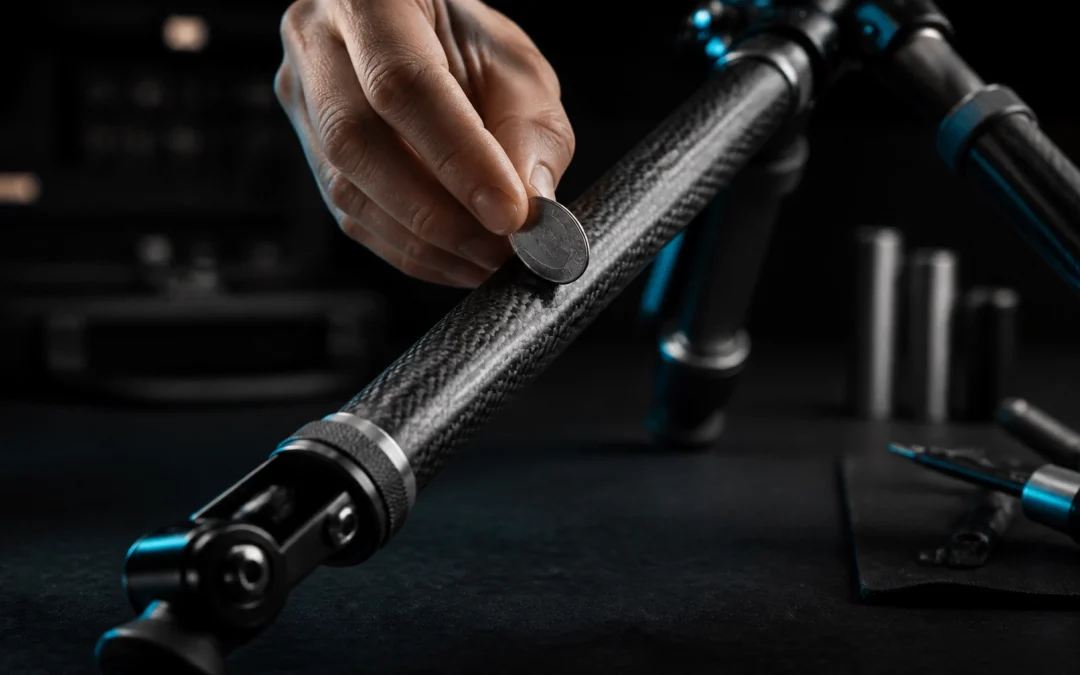
The "coin test" or acoustic tap test is a proven method used in aerospace and high-end cycling to detect composite voids. It relies on the change in resonant frequency when a solid laminate becomes hollow or separated.
1. Establish a Baseline
Select a leg segment that you know is undamaged: typically the uppermost section that has not seen significant impact. Using a small coin or a light metal tool, tap the carbon surface gently. You should hear a clear, high-pitched "ting" or a sharp "clack." This is the sound of a healthy, solid laminate.
2. Systematically Scan the Legs
Hold the tripod leg lightly with your fingers to avoid damping the vibrations. Begin tapping every 1–2 centimeters along the entire length of each leg. Pay close attention to areas near leg locks, joints, and any visible scuffs.
3. Identify Sound Variations
As you move along the tube, listen for a sudden change in pitch. A dull, flat "thud" or a hollow, muffled sound indicates a likely area of delamination. If you encounter a suspicious zone, compare it to the same position on a symmetrical leg. If one sounds "bright" and the other sounds "dead," the structure is compromised.

Visual Signs of Carbon Fiber Stress
While the tap test is powerful, it should be paired with a meticulous visual inspection. Because we specialize in professional camera gear repair, we often see damage that users have overlooked during a casual glance.
Whitening and Cloudiness
Look for localized "bruising" or a milky, white appearance beneath the clear coat. This is often a sign of resin fracturing or fiber-to-matrix debonding.
Hairline Surface Cracks
Search for fine cracks that run circumferentially (around the tube) rather than just scratches in the clear coat. If a crack catches your fingernail, it is likely more than cosmetic.
Bulges or Blisters
Run your hand along the leg. Any subtle swelling or unevenness in the circular profile suggests that the internal layers have buckled or expanded due to impact.
Functional Indicators of Failure
Sometimes the damage reveals itself through the performance of the gear. If you notice any of the following, your tripod requires an immediate camera tripod repair service evaluation:
- Localized Flex: If one section of the leg feels "soft" or springy when you apply pressure compared to the others.
- Audible Creaking: New clicking or cracking noises when tightening leg locks or mounting a heavy camera.
- Increased Vibration: A loss of the signature "deadness" of carbon fiber, where the tripod "shivers" or takes longer to settle after a touch.

Why Professional Evaluation Matters
It is tempting to attempt a DIY fix using epoxy or wraps to fix a broken tripod leg. However, carbon fiber repair is a high-precision science. A superficial patch may look good but fail to restore the original load-bearing capacity.
At TripodRepair, our process is built on technical expertise:
- Comprehensive Assessment: We don't just fix the obvious break; we inspect the entire unit for secondary damage in the joints and locks.
- Material Integrity: We understand the specific resin and fiber requirements for different brands, from Gitzo to Manfrotto.
- Honest Evaluation: If a leg segment is structurally unsound beyond safe repair, we provide transparent advice on replacement rather than offering a "bandage" solution.
Our Meticulous Repair Process
When you send your equipment to us, we follow a rigorous protocol to ensure it returns to you in "like-new" condition.
- Acoustic Mapping: We map out every dull zone to identify the full extent of internal damage.
- Structural Cleaning: Removing debris and old lubricants from the joints and leg locks to ensure smooth operation.
- Precision Reinforcement: Using specialized techniques to stabilize weakened areas or replacing the damaged segment entirely with genuine parts.
- Load Testing: Every repaired tripod is subjected to weight-bearing tests to ensure it meets original manufacturer specifications.

Regain Confidence in Your Gear
A damaged tripod is a liability that can lead to thousands of dollars in camera repairs if it fails during a shoot. Don't leave your next project to chance. By performing the 30-second acoustic tap test regularly, you can catch minor issues before they become major failures.
If your tripod sounds dull, feels soft, or shows signs of impact, let us help you. At TripodRepair, we are dedicated to the craftsmanship that extends the life of your most critical equipment. Whether you are a studio professional or a dedicated enthusiast, our goal is to help you capture every moment with total stability and peace of mind.
Contact us today for a professional evaluation and restore your gear to its optimal performance.