
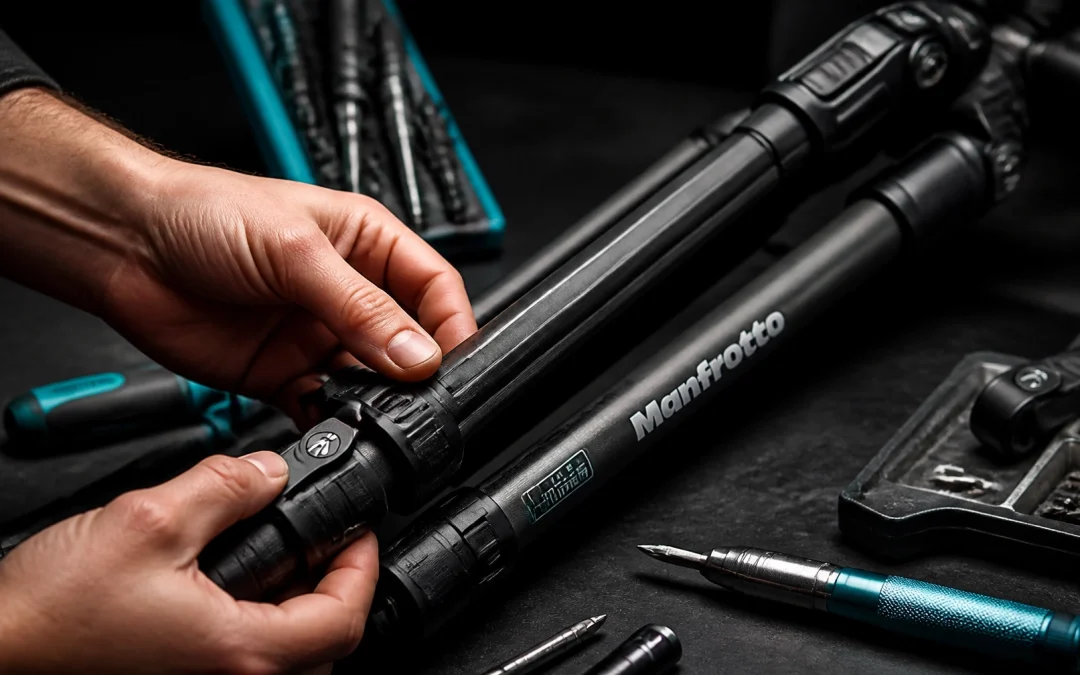
For professional photographers and videographers, a Manfrotto tripod is more than just a piece of support gear: it is a foundational tool. Known for their rugged reliability and innovative design, Manfrotto supports like the 055 and 190 series are industry staples. However, even the most robust equipment eventually succumbs to the rigors of the field. Salt spray, fine desert sand, and years of mechanical stress can lead to slipping legs, wobbly center columns, and jammed locking mechanisms.
At TripodRepair, we believe that a worn tripod shouldn’t mean a retired tripod. Our expert restoration services are designed to return your equipment to its original factory precision. In this comprehensive guide, we will explore the most common mechanical failures and provide the diagnostic steps needed for an effective Manfrotto tripod repair.
Addressing Leg Slippage
Restoring Tension
The most frequent issue encountered by Manfrotto users is "leg creep": where a leg section slowly collapses under the weight of the camera. On models featuring the classic Quick Power Lock (QPL) or traditional flip-lever systems, this is typically caused by a loss of clamping tension.

The Repair Process:
- Initial Assessment: Identify which section is failing by applying downward pressure on the tripod head while the legs are locked.
- Nut Adjustment: Manfrotto flip-locks often include a small hex nut on the pivot point. Using the specialized wrench often included with the tripod (or a standard socket), tighten the nut in very small increments: no more than a 1/4 turn at a time.
- Load Testing: Close the lever and test the resistance. The lever should snap shut with a firm, tactile click without requiring excessive force.
- Shim Inspection: If tightening the nut does not resolve the slip, the internal plastic shims (or "clamping sleeves") may be worn or cracked. We often see these components fail after years of heavy use, requiring a full replacement to restore structural integrity.
Revitalizing Twist-Locks
Internal Maintenance
While flip-locks are common, many modern travel and carbon fiber models utilize twist-lock mechanisms. When these become gritty or fail to grip, it is usually a sign of internal contamination. Unlike flip-locks, twist-locks rely on clean friction surfaces and precise internal threads.

The Repair Process:
- Complete Disassembly: Unscrew the locking collar until the leg section can be fully removed.
- Component Cleaning: Meticulously clean the internal threads of the collar and the exterior of the leg tube. We recommend using a lint-free cloth and a mild degreaser to remove old, contaminated lubricant.
- Shim Replacement: Inside the lock, you will find white or black plastic "C-shaped" shims. These are critical for the locking action. If they are flattened, warped, or missing, the leg will never lock securely.
- Precision Lubrication: Apply a minimal amount of high-grade silicone grease only to the threads: never to the friction shims themselves. Excess lubrication is a magnet for sand and grit, which leads to premature wear.
Eliminating Center Column Wobble
Stabilizing the Casting
A wobbly center column can ruin a long-exposure shot and compromise the safety of your camera. This instability usually originates at the "spider": the central casting where the three legs and the column meet.

The Repair Process:
- Casting Tightening: Locate the hex screws that secure the casting around the center column. Over time, these can vibrate loose. Use a professional-grade Allen key to ensure they are seated firmly.
- Collar Inspection: Check the tightening knob or lever that locks the column height. If the knob spins without tightening, the internal threaded insert may be stripped.
- Plate Security: Ensure the top mounting plate (where the head attaches) is not the source of the wobble. Many Manfrotto models use three small grub screws on the underside of the plate to lock the head in place; these must be flush and tight.
For more information on how Manfrotto compares to other major brands in terms of maintainability, visit our detailed guide on Gitzo vs. Manfrotto vs. Sachtler tripod repair.
Solving Stuck Leg Sections
Deep Cleaning Protocols
"Stuck" legs are often the result of exposure to salt water or fine silt. When moisture enters the leg tubes, it can cause the aluminum to oxidize or the internal shims to swell, effectively "welding" the sections together.
The Repair Process:
- Controlled Extraction: We use specialized tools to safely extract jammed leg sections without denting the aluminum or splintering carbon fiber.
- Surface Honing: For aluminum legs, minor corrosion is removed using fine-grit abrasives to restore a smooth sliding surface.
- Total Decontamination: Every component is placed in an ultrasonic cleaner or thoroughly hand-washed to ensure no abrasive particles remain.
Professional Restoration vs. DIY
While basic tension adjustments can often be handled in the field, certain issues require a professional touch. At TripodRepair, we specialize in the meticulous restoration of both modern and vintage Manfrotto models.
When to send it to a professional:
- Cracked Castings: If the main "spider" or the leg hinges show signs of stress fractures, the tripod is no longer safe to support your gear.
- Bent Tubes: Aluminum tubes that have been dented or bent will not telescope correctly and require replacement.
- Broken Plastic Components: Many modern Manfrotto tripods use high-impact plastics that, once snapped, cannot be effectively glued. We source genuine replacement parts to ensure a factory-spec fit.
- Seized Hardware: If a screw is stripped or seized due to corrosion, attempting to force it often results in further damage to the casting.
Trust the Experts
Your tripod is a critical investment in your craft. Don't let a loose lock or a wobbly joint stand between you and the perfect shot. Whether you are dealing with a vintage 190 or a modern carbon fiber 055, our team provides the niche expertise required for a comprehensive tripod repair.
Let us help you restore the stability and confidence your work deserves. If your gear is showing signs of wear, contact us today for an honest evaluation. We are committed to extending the life of your equipment through high-quality craftsmanship and technical precision.
Capture every moment with the stability of a tripod that performs like new.