
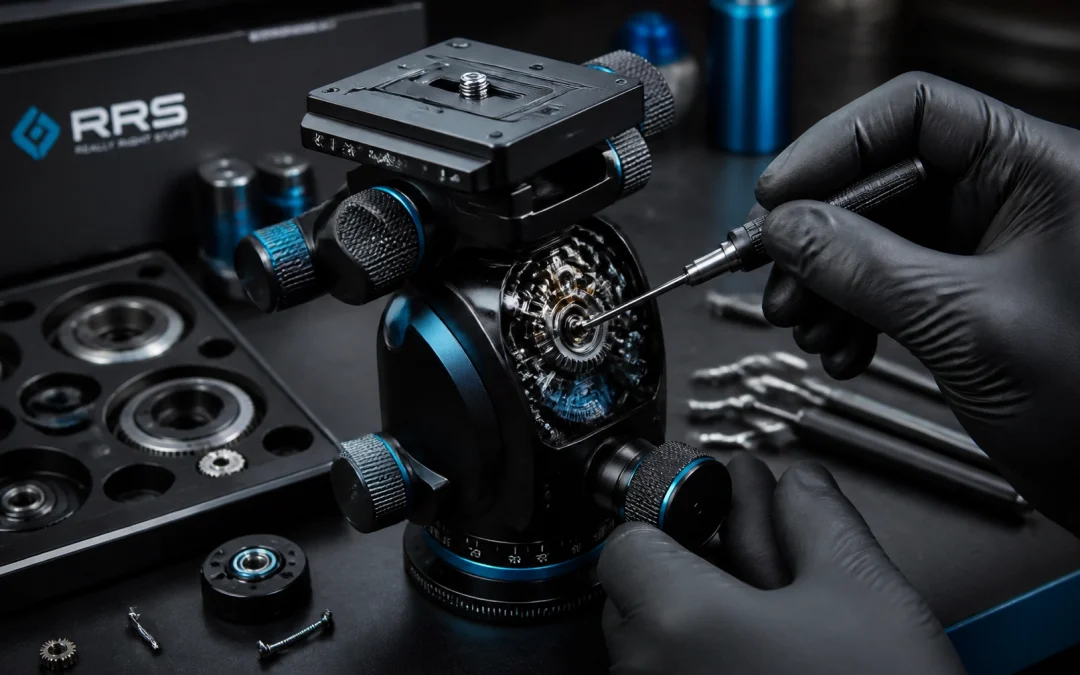
For professional photographers and videographers, a reliable support system is just as crucial as high-end glass and camera sensors. When your equipment starts to falter: whether through a sluggish fluid drag, a sudden slip in your ball head, or a loose pan handle: your entire production workflow can grind to a halt. At TripodRepair, we understand that precision and stability are non-negotiable in professional media production.
Rather than prematurely discarding high-value gear, understanding the mechanics of tripod head repair can save you hundreds of dollars while extending the operational lifespan of your equipment. In this comprehensive guide, we examine the root causes of sticky fluid heads, slipping ball heads, and loose tension mechanisms, and outline expert strategies to restore factory-level performance.
Diagnosing Common Head Failures
Before diving into wrenches and cleaning agents, a meticulous assessment is required. Tripod heads endure immense torque, environmental debris, and heavy payloads over years of field use.
- Sticky Fluid Resistance: Often caused by accumulated dust, degraded damping grease, or internal leakage within video heads.
- Slipping Ball Mechanisms: Usually triggered by surface contamination on the ball, worn-out clamping jaws, or inadequate tension knob calibration.
- Wobbling Pan Handles: Stemming from stripped threading, loose internal set screws, or fatigued friction plates.
Identifying whether the issue is surface-level grime or internal mechanical wear dictates your repair path. For a broader look at how different manufacturer builds compare, you can explore our analysis on gitzo vs manfrotto vs sachtler tripod repair.

Restoring Fluid Heads
Video fluid heads rely on delicate internal viscosity to produce buttery-smooth pans and tilts. Over time, that smooth resistance can turn into a gummy, uneven drag.
External Cleaning
Begin by wiping down the exterior housing using a lint-free microfiber cloth dampened with isopropyl alcohol. Avoid aggressive solvents like acetone, which can degrade rubberized grips and plastic housings. Clear away grit around the pan and tilt locks.
Internal Servicing
If external cleaning fails, accessing the internal drag discs may be necessary:
- Disassemble Methodically: Carefully remove the pan handle, top mounting plate, and drag adjustment knobs while working over a clean tray to catch small internal springs and washers.
- Clean Drag Rings: Wipe down the internal PTFE or brass drag discs using pure alcohol to remove oxidized grease and debris.
- Re-apply Damping Fluid: Replenish the mechanism with the manufacturer-specified high-viscosity damping grease. Never substitute standard machine oil, as it lacks the necessary shear resistance.
For studio professionals looking to learn more about our specialized approach, visit our about us page.
Fixing Slipping Ball Heads
A ball head that loses its grip under the weight of a heavy telephoto lens is frustrating and dangerous for your camera gear.
[Inspect Locking Ring] ---> [Clean Ball & Socket] ---> [Calibrate Tension Knob] ---> [Test Clamp Grip]
Ball and Socket Maintenance
Dust and microscopic debris act like ball bearings between the aluminum ball and its synthetic socket liners.
- Unlock the main tension knob and remove or expose the ball.
- Clean the spherical surface thoroughly with isopropyl alcohol.
- Inspect the socket interior for pitting or uneven wear. For standard ball heads, a microscopic trace of dry silicone lubricant can enhance smoothness, though some specialized pistol-grip designs require absolute dryness.
Addressing Thread Wear
If your locking knob turns completely tight but the ball still drifts, the internal clamping threaded rod may be stretched or stripped. Back out the tension assemblies, inspect the threads, and replace worn components immediately to prevent catastrophic slipping during a shoot.

Sourcing Genuine Components
When undertaking repairs on elite support systems, component compatibility is paramount. Generic hardware store bolts and washers rarely match the exacting metallurgical tolerances required for high-end photography gear.
For legendary brands like Gitzo, acquiring authentic gitzo tripod parts is essential for maintaining structural rigidity and resale value. Whether you need replacement locking collars, center column hooks, or specialized tension pins, using OEM components ensures seamless integration with existing carbon fiber leg sets. If your equipment has suffered physical trauma beyond the head itself: such as a bent chassis or a twisted collar: you may also need to fix broken tripod leg components to restore overall stability.
Comprehensive Structural Checks
Tripod heads do not operate in a vacuum; their performance is tied directly to the platform they rest upon.
Bowl Clamp Adjustment
If your entire fluid head rocks or rotates slightly inside a 75mm or 100mm half-ball bowl, inspect the tie-down handle underneath. The inner grip cup that bites into the underside of the half-ball can become polished smooth over years of tightening. Lightly abrading this surface with fine-grade emery cloth will instantly restore high-friction grip.
Pan Handle Alignment
Wobbling pan handles are frequently caused by loose internal hex screws hidden beneath rubber end caps. Tightening these securing fasteners eliminates play and restores positive feedback during rapid tracking shots.

When to Seek Professional Expertise
While minor tension adjustments and external cleanings are manageable in a home studio, advanced repairs require professional intervention. Consider expert service when:
- Fluid heads exhibit persistent oil leakage that cannot be resolved by standard seal replacement.
- Internal clamping mechanisms or cast aluminum chassis components are cracked or fractured.
- You require certified OEM replacement parts and precision calibration to guarantee equipment safety under heavy cinema payloads.
At TripodRepair, our veteran technicians combine niche mechanical expertise with a rigorous evaluation process, ensuring your gear is restored to optimal working order.

Conclusion and Next Steps
A properly maintained tripod head provides years of dependable service, translating into steady, vibration-free captures on every assignment. Don't let a sticky drag or slipping tension knob compromise your next production.
If your equipment requires professional attention, contact us today. Let our dedicated specialists evaluate your gear and help you recapture absolute precision in the field.